
12 hr
Ranthambore Safari Day Trip from Jaipur
Journey through Rajasthan's wilderness on a full-day wildlife adventure with expert naturalist guides
Reserve
Hand-picked by our editors — only the best 5 safari experiences from 23 reviewed.
Verified partners for every tour, free cancellation where available, and instant confirmation on every booking.
12 hr
Journey through Rajasthan's wilderness on a full-day wildlife adventure with expert naturalist guides
Reserve
12 hr
Full-day expedition to spot Bengal tigers and diverse wildlife in one of India's premier national parks
Reserve
24 hr
Full-day wildlife adventure tracking tigers in Ranthambore, including historic fort exploration and lunch
ReservePrices from verified partners. Availability updates in real time at checkout. Free cancellation policies apply where shown.
The landmarks, rooms, and views travelers on this tour remember — all visible on a single visit.
This 10th-century fortress overlooks the entire park and contains three ancient stone temples. The structure is an iconic landmark within the core zone of Ranthambore National Park.
A sacred site located within the Ranthambore Fort walls, this temple is a popular stop for both pilgrims and park visitors. It is an integral part of the Ranthambore National Park heritage.
Historically a hunting lodge for royalty, this building stands near the scenic Padam Talao lake inside Ranthambore National Park. It serves as a historic architectural landmark near the water.
This large lake is the most famous water body in Ranthambore National Park, frequently attracting tigers and sambar deer. It provides stunning reflections of the surrounding ancient ruins.
These stone ruins are overgrown with vegetation and stand as a silent testament to the history of Ranthambore National Park. Tigers are often spotted stalking prey in the vicinity.
Ranthambore offers superior wildlife visibility for those willing to endure longer travel, whereas Sariska provides a more accessible day trip from Jaipur. A same day ranthambore tour from jaipur tours the more famous wilderness, while Sariska remains the closest option for local wildlife exploration.
| Feature | Top pick Ranthambore | Sariska |
|---|---|---|
Travel time from Jaipur |
3.5–4.5 hours | 2–2.5 hours |
Tiger density/sightings |
High | Low to moderate |
Park size |
1,334 sq km | 881 sq km |
Overall park reputation |
Internationally renowned | Regional wildlife sanctuary |
Infrastructure |
Established jungle safari network | Developing tourist amenities |
Opening hours |
06:00–18:30 daily | 06:00–18:30 daily |
| See tickets → |
Verdict: Travelers prioritizing frequent tiger sightings should book same day ranthambore tour from jaipur tickets, while those seeking reduced transit time will find the Sariska tiger reserve tour a more convenient alternative.
Choose your ticket, select your date, and reserve in under two minutes. Secure checkout handled by our verified partner.
Instant confirmation by email, with a mobile voucher you can save offline. No printing, no queuing at a collection desk.
Arrive at the entrance, show your voucher on your phone, and walk in. Most tickets include priority or skip-the-line access.
Practical details for your visit straight from our verified partners — hours, access, rules, and how to get there.
Ranthambore Road, Sawai Madhopur
Present original passport 30 min early
Private taxi from Jaipur provides the most direct route via NH52.
Train from Jaipur to Sawai Madhopur, then local taxi to park.
Wear neutral-colored, comfortable clothing that blends with the forest environment. Avoid bright colors and carry a hat and sunglasses for sun protection.
Only essential small bags are recommended. You must present the original passport used during booking at the gate for identity verification.
Photography is permitted, but drones are strictly prohibited. Use quiet, non-flash equipment to avoid disturbing wildlife.
The park terrain is rugged and unpaved. Visitors must be physically able to board high-clearance safari vehicles.
Children must be included in the booking as named passengers with valid ID. Safaris are suitable for older children who can remain quiet for extended periods.
Carry your own water and light snacks, as there are no food outlets inside the safari zones. Dispose of all waste outside the park.
Ranthambore Road, Sawai Madhopur
Present original passport 30 min early
Get directionsBest time to go, insider tips, nearby landmarks, and the cancellation fine print — flip through to skim what matters to you.
How crowds, weather, and events shift across the year.
March to May temperatures rise, pushing wildlife toward waterholes, increasing sighting probability.
June is hot, providing excellent visibility of tigers at water points before the monsoon closure.
October brings lush landscapes after the park reopens on the 1st.
November to February offers cool, pleasant weather ideal for full-day birdwatching and forest drives.
Small details that turn a good visit into a great one.
Secure your same day ranthambore tour from jaipur tickets at least 90 days prior.
You must show your original passport for the same day ranthambore tour from jaipur entry.
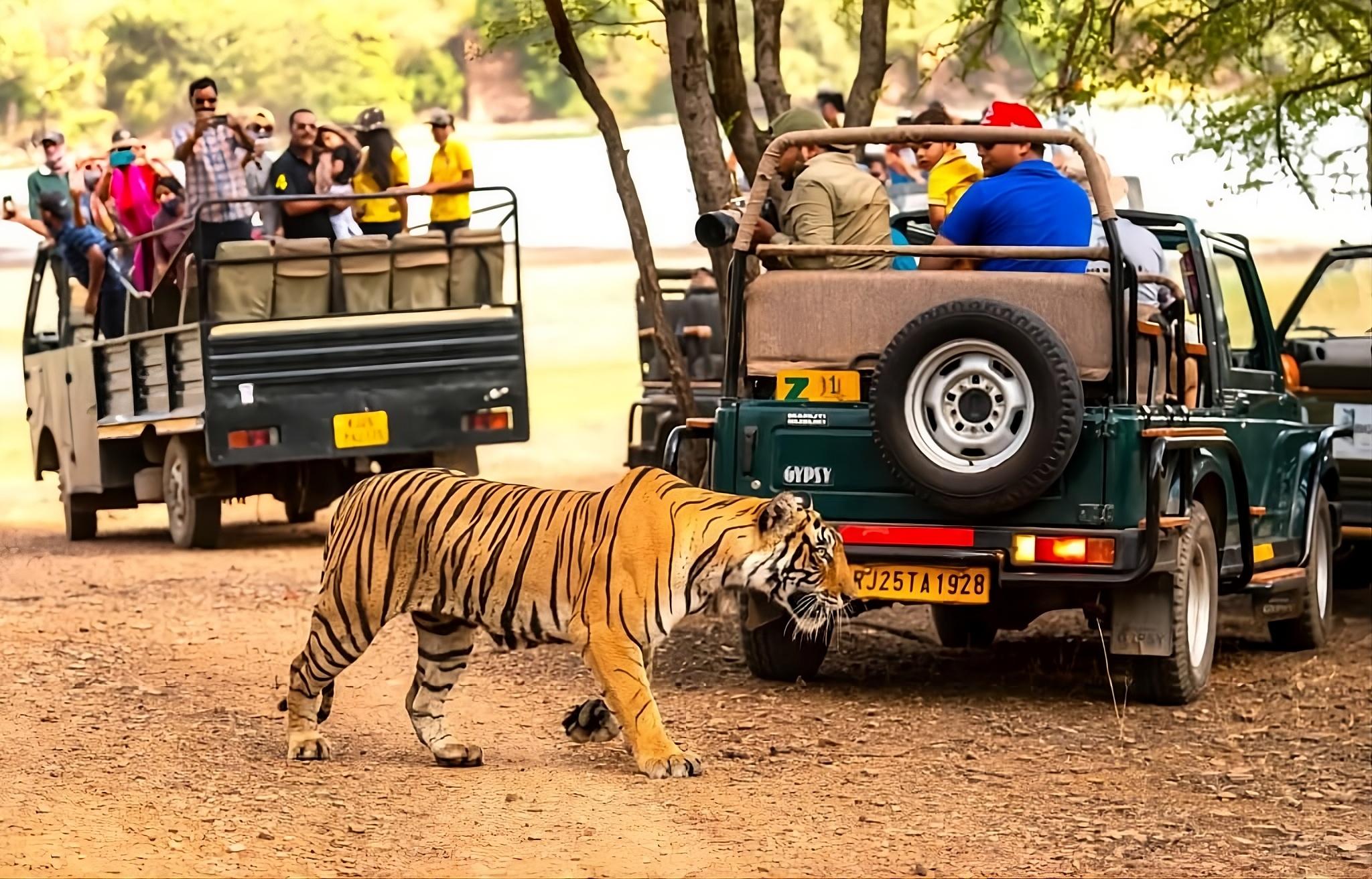
The 6-seater Gypsy is better for a same day ranthambore tour from jaipur than a Canter.
Stay inside the vehicle at all times during your same day ranthambore tour from jaipur.
Remember that your same day ranthambore tour from jaipur zone is randomly assigned.
Get to the gate early for your same day ranthambore tour from jaipur to avoid delays.
Minimize noise to maximize your same day ranthambore tour from jaipur wildlife sightings.
Leave no trace during your same day ranthambore tour from jaipur visit.
Non-bookable sights within a short walk — free to visit, easy to pair.
Ancient 10th-century fortress offering panoramic views of the entire reserve.
Sacred site located within the fort walls, frequented by local pilgrims.
Historical hunting lodge situated near the picturesque Padam Talao lake.
Stone remains of old structures covered in vegetation, often visited by tigers.
Flexible, no hidden fees.
Safari permits are strictly non-refundable and non-transferable once confirmed. Fees, including the 800 INR entrance and eco-development fee for foreign nationals, are payable in full at the time of booking.
Hand-picked options within walking distance — pick a district for vibe, or a specific hotel for convenience.
High-end resort offering guided safari coordination and comfort.
Tented accommodation providing an authentic wilderness stay experience.
Various local guesthouses available near the park periphery.
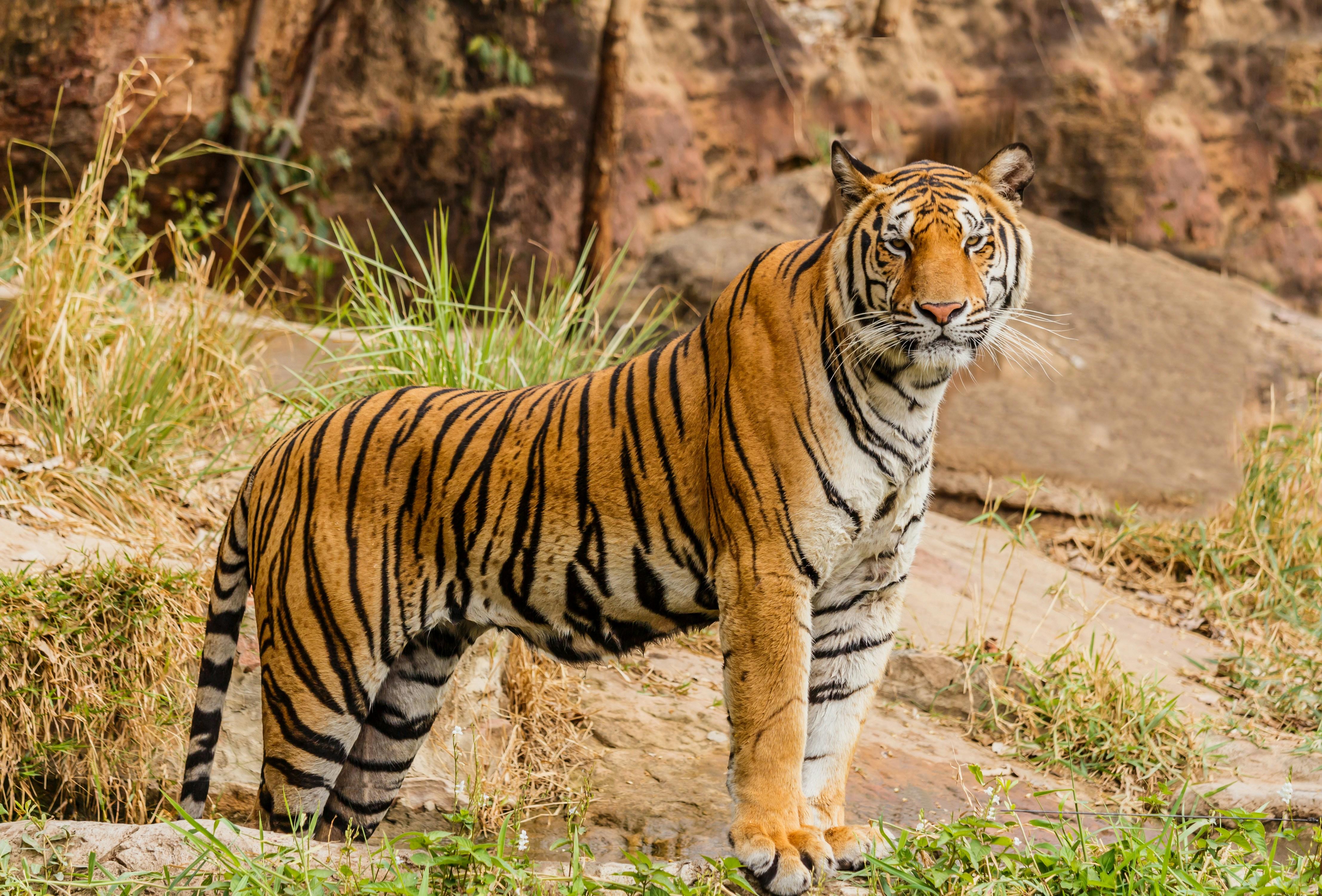
Ranthambore National Park covers 1,334 square kilometres of the Aravalli and Vindhya hill ranges, its dry deciduous forest and open grassland sheltering one of India's densest Bengal tiger populations. The reserve was designated Project Tiger territory in 1973, transforming what had been the Maharaja of Jaipur's private hunting grounds into a critical conservation zone. Today roughly 75 tigers inhabit zones one through ten, their territories mapped and monitored by the forest department's field biologists. The park's topography creates natural amphitheatres where predator and prey converge. Three ancient lakes — Padam Talao, Malik Talao, and Raj Bagh — serve as dry-season water sources, drawing sambar deer, nilgai antelope, and wild boar to their margins during the April-to-June heat. Tigers time their hunts to these congregations, often appearing at dawn or dusk when prey animals lower their guard. The Aravalli ridgelines offer elevated sightlines; Jogi Mahal and the lakeside ruins of Raj Bagh Talao frame many documented sightings. Leopards occupy the rockier slopes, while sloth bears forage in the tendu and dhok forests that dominate the canopy. Ranthambore Fort, a UNESCO World Heritage Site within the park boundary, rises 210 metres above the forest floor. Built in the 10th century by the Chauhan dynasty, the fort's sandstone ramparts and Ganesh temple remain intact, accessible via a winding motorable road that park authorities open to safari vehicles. The same day Ranthambore tour from Jaipur typically allocates three hours for a morning or afternoon canter safari, the open-top vehicles accommodating twenty passengers and offering unobstructed views across the deciduous scrub. Naturalists guide each safari, interpreting alarm calls — langur barks, sambar bellows — that signal tiger movement. The reserve operates a zonal booking system; zones one through five offer the highest tiger density, while zones six through ten provide quieter forest immersion. Safari slots fill weeks in advance during peak season, October through March, when cooler temperatures draw both wildlife and visitors. The forest department caps daily vehicle entry to minimize disturbance, a constraint that has helped Ranthambore's tiger population recover from 25 individuals in 2005 to current levels. Tigress T-19, known as Krishna, and her lineage dominate the lake zones, their territories overlapping with the fort's western perimeter where sighting probabilities peak.
"Roughly 75 tigers inhabit zones one through ten, their territories mapped and monitored by field biologists."
A step-by-step walkthrough of the visit — what you'll see, how long each stage takes, and the details that matter.
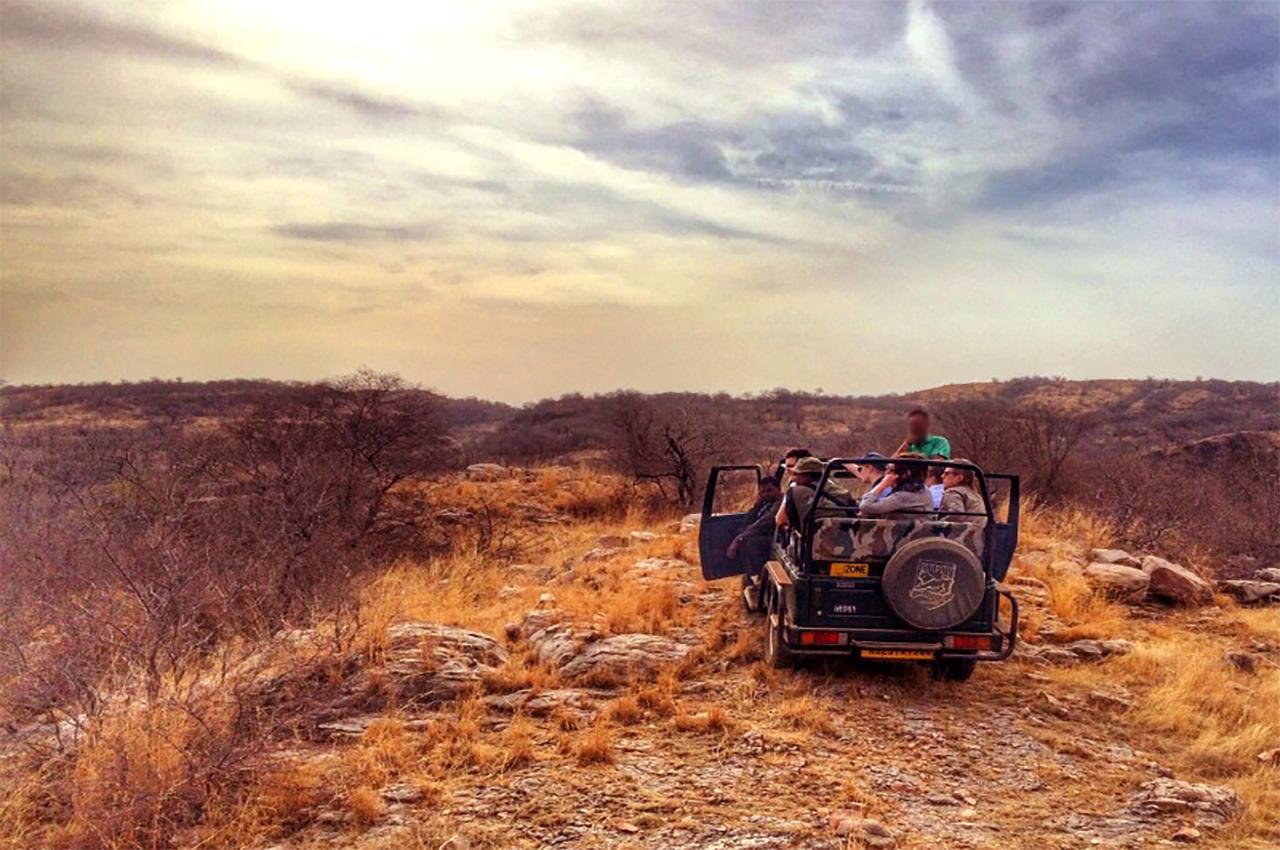
You depart Jaipur before dawn, the highway cutting southeast through Dausa district as first light spreads across the Aravalli foothills. The drive takes three hours; you arrive at Ranthambore's gate by 6:00 AM, when the forest department opens safari bookings. Your naturalist briefs the group on tiger behaviour and zone assignments — today you enter zone three, which borders Padam Talao. The canter rolls through the Lakarda entrance, its diesel engine rumbling low as you pass the first dhok trees. Within minutes your naturalist spots pug marks in the dust, fresh from the previous night. You scan the treeline, binoculars raised, while spotted deer freeze mid-graze. A sudden alarm call — sharp, repetitive — echoes from the left. The driver cuts the engine. Silence. Then movement: a tigress emerges from the lantana thicket, her orange coat brilliant against the pale grass. She crosses the track fifteen metres ahead, pausing to scent the air before disappearing into the ravine that leads to the lake. After the safari you ascend to Ranthambore Fort, the road winding past ancient chhatris and the Ganesh temple where priests offer blessings. The fort's upper terrace overlooks the entire reserve, its lakes glinting below. You return to Jaipur by late afternoon, the same day Ranthambore tour from Jaipur complete.
Ranthambore National Park is open daily from 06:00–18:30 for safaris. It is essential to arrive during the best window of 06:00–10:00 for the best tiger sighting probability.
Yes, advance booking is highly recommended as permits for the Ranthambore National Park fill up 90 days in advance.
No, zones for your Ranthambore National Park visit are assigned randomly by the forest department and cannot be changed.
You must carry your original passport for your Ranthambore National Park entry; copies are not accepted.
Each safari shift in Ranthambore National Park lasts approximately 3.5 hours.
Yes, photography is allowed during your Ranthambore National Park tour, but flash and drones are strictly prohibited.
No, there is no food or drink available inside the Ranthambore National Park zones, so please carry your own.
Yes, children are welcome on a Ranthambore National Park safari but must be included in the booking with valid ID.
The forest department may restrict routes in Ranthambore National Park if weather conditions are unsafe.